









Teresa Montoya’s Tó Łitso (Yellow Water): Ten Years after the Gold King Mine Spill: Opening Keynote
@ Block Museum of Art, Northwestern University
40 Arts Circle Dr, Evanston, IL 60208
Opening Saturday, February 7th, from 2PM - 3:30PM
On view through Sunday, June 14th
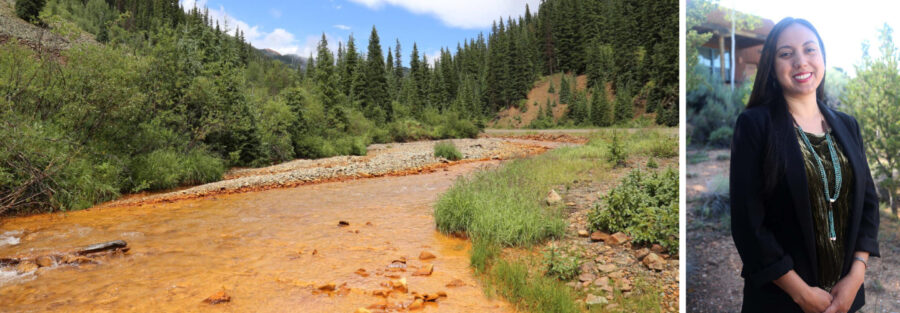
Celebrate the opening of Teresa Montoya’s Tó Łitso (Yellow Water): Ten Years after the Gold King Mine Spill. The exhibition explores the impact of the 2015 Gold King Mine spill on Diné (Navajo) communities in the Animas and San Juan watersheds. Combining documentary photographs with scientific data and poetic reflection, Tó Łitso invites viewers to consider water as a life-sustaining resource and as a conduit for histories, stories, and harm.
During this public program, exhibition curator Kathleen Bickford Berzock and Associate Professor of Global Health Studies Beatriz Oralia Reyes will share a welcome, followed by a presentation by Teresa Montoya, artist and University of Chicago Assistant Professor of Anthropology. Montoya will give a keynote explicating her photographic practice and the ethical dilemmas involved in documenting environmental disasters, especially within the long history of image-making on Indigenous homelands. Her presentation will be followed by a conversation between Montoya and Carl Fuldner, Assistant Professor of Art History at the University of Chicago, examining her methodology and how her work relates to other photography projects addressing industrial contamination and its impact on communities. The program will be followed by a light reception.
Participation level – light, audience members can choose to participate in the Q&A at the close of the program.
Programs are open to all, on a first-come first-served basis. RSVPs are not required, but are appreciated.
ABOUT THE SPEAKERS
Kathleen Bickford Berzock is Associate Director of Curatorial Affairs at Northwestern University’s Block Museum of Art, Professor of Practice in Northwestern’s Department of Anthropology, and affiliated faculty in the Department of Art History and the Program of African Studies.
Beatriz Oralia Reyes (Diné) is Associate Professor of Global Health Studies at Northwestern University. She earned her Bachelor of Science in Zoology from the University of Oklahoma and her Master of Public Health in Health Behavior from East Carolina University. Reyes is a trained public health practitioner. Her research interests work at the intersection of chronic disease prevention, program evaluation, and qualitative research. She aims to explore the best practices for developing culturally appropriate and sustainable interventions by working with communities through the research process.
Teresa Montoya (Diné) is a photographer, social scientist, and Assistant Professor in the Department of Anthropology at the University of Chicago. Her research and creative practice focus on contemporary problems of environmental governance in relation to historical legacies of land dispossession and resource extraction across the Indigenous Southwest. Her work has been published in the American Journal of Public Health, Anthropology Now, Cultural Anthropology, Journal for the Anthropology of North America, Ecology and Society, Environment and Planning E: Nature and Space, Visual Anthropology Review, and Water International. She has curatorial experience in various institutions, including the Field Museum where she served as a guest curator for Native Truths: Our Voices, Our Stories. She is the founding member of Diné in Focus, a collective dedicated to Diné photojournalism through a Diné lens. Website: https://teresamontoya.squarespace.com/
Carl Fuldner is an art historian and curator whose practice engages with the history of photography, environmental toxicology, and the intersections of art and natural history. His projects and collaborations of late have focused on themes of environmental aesthetics, pollution, and public health from the late nineteenth century through the postwar decades. Where photography is concerned, he is particularly interested in documentary efficacy and how lens-based technologies structure our interactions with the world.
Fuldner earned a PhD in Art History from the University of Chicago in 2018. He also has over fifteen years of experience working for museums and cultural institutions, including the Art Institute of Chicago, Yale University Art Gallery, Smart Museum of Art, Madison Museum of Contemporary Art, Wisconsin Historical Society, and Villa Albertine. He is a co-editor of The Art Institute of Chicago Field Guide to Photography and Media (2023).
—
On August 5, 2015, the rupture of the abandoned Gold King Mine near Silverton, Colorado, released more than three million gallons of toxic wastewater into the Animas River, turning its waters a shocking shade of yellow. In the following year, artist and anthropologist Teresa Montoya (Diné, born 1984) embarked on a road trip from Silverton to Shiprock, New Mexico, retracing the path of the contaminated water and documenting its ongoing cultural, spiritual, and material effects on the Navajo Nation and other Indigenous communities downstream.
Marking the ten-year anniversary of the disaster, The Block Museum of Art partners with Montoya to revisit this journey. Tó Łitso (Yellow Water) explores the enduring consequences of the Gold King Mine spill through photography, sound recordings, water samples, and cartographic data.
Combining documentary photographs with scientific data and poetic reflection, Tó Łitso invites viewers to consider water not only as a life-sustaining resource but also as a conduit for histories, stories, and harm. In doing so, the exhibition challenges extractive frameworks of land use, centering Indigenous knowledge and resilience. Through Montoya’s interdisciplinary practice, Tó Łitso (Yellow Water) offers a powerful meditation on environmental and cultural justice in the Southwest and beyond.
“The 2015 spill had discharged more than three million gallons of acidic mine waste fluid into Cement Creek before joining the Animas River and eventually into the San Juan River, which flows directly across the Navajo Nation. Through my photographic journey, I make explicit the enduring presence of toxicity across multiple landscapes and territories. Sometimes it appears beautiful, other times haunting. The images highlight the relationships that various communities sustain through water/tó despite the occurrence of repeated and enduring contamination from upstream locales. The Gold King Mine Spill shows us this, even in that, which cannot be readily seen.” – Teresa Montoya
Pronounce: Tó Łitso
Teresa Montoya’s Tó Łitso (Yellow Water): Ten Years after the Gold King Mine Spill was curated by Kathleen Bickford Berzock, Associate Director of Curatorial Affairs, and Marisa Cruz Branco (Isleta Pueblo/Portuguese), Terra Foundation Fellow, in collaboration with the artist. It was supported in part by a grant from the Illinois Arts Council. Ahéhee’ (thank you) to Janene Yazzie, John Hosteen, Wade Campbell, and Andrew Curley for Diné language and curatorial guidance.
About Teresa Montoya
Teresa Montoya (Diné) is a photographer, social scientist, and Assistant Professor in the Department of Anthropology at the University of Chicago. Her research and creative practice focus on contemporary problems of environmental governance in relation to historical legacies of land dispossession and resource extraction across the Indigenous Southwest. Her work has been published in the American Journal of Public Health, Anthropology Now, Cultural Anthropology, Journal for the Anthropology of North America, Ecology and Society, Environment and Planning E: Nature and Space, Visual Anthropology Review, and Water International. She has curatorial experience in various institutions, including the Field Museum where she served as a guest curator for Native Truths: Our Voices, Our Stories. She is the founding member of Diné in Focus, a collective dedicated to Diné photojournalism through a Diné lens. Website: https://teresamontoya.squarespace.com/
Official Website
More events on this date
Tags: Block Museum, Evanston, Teresa Montoya’s Tó Łitso (Yellow Water), Teresa Montoya’s Tó Łitso (Yellow Water): Ten Years after the Gold King Mine Spill
« previous event